We drive guests to Split ferry port for Hvar most days from May through September, and we hear the same questions in the car: which ferry, where to stay, what’s actually worth seeing once you arrive. After enough trips back and forth, we’ve ended up with answers we trust. This is what we tell people who ask us before booking.
Hvar is the sunniest island in Croatia, the most photographed, and the most expensive. It’s also bigger and more varied than its reputation suggests — there’s a serious old town, a wine region, lavender fields, and a string of beaches and offshore islets that take a week to explore properly.
Quick facts
- Distance from Split: ~43 km by sea
- Ferry to Hvar Town (catamaran): 55-60 minutes, ~€20 one way (Krilo or Jadrolinija)
- Ferry to Stari Grad (car ferry): ~2 hours, ~€8 per foot passenger; takes vehicles
- Frequency in summer: Up to 17 daily crossings on the Split-Hvar route combined
- Two main towns: Hvar Town (south-west, busy) and Stari Grad (north, quieter)
- Population: ~11,000 year-round, multiplied many times in July/August
- Best base for first-timers: Hvar Town for 2-3 nights, then a day in Stari Grad and the wine region
Getting to Hvar — pick the right ferry
This is the most common mistake we see: guests arrive in Stari Grad expecting Hvar Town. They are 20 km apart on the same island, with a winding road in between. Pick the ferry based on where you’re staying. Live timetables for both Jadrolinija and Krilo are easiest to check on the official Jadrolinija site.
Catamaran to Hvar Town. Faster, foot passengers only, no cars. Run by Jadrolinija (line 641) and Kapetan Luka-Krilo. Sails from Split passenger terminal piers (Gates 1-4). Around €20 one way, 55-60 minutes. In peak season there are 4-6 departures daily plus the high-frequency tourist runs. Tickets sell out in July and August — book online.
Car ferry to Stari Grad. Run by Jadrolinija. Takes vehicles. Slower (~2 hours) but cheaper (~€8 foot passenger). Departs from the main car ferry ramps further east in the Split port. 6-9 daily sailings in summer between roughly 5:00 and 22:00. Stari Grad is about 25 minutes by bus or taxi from Hvar Town if that’s your final destination.
From Dubrovnik. Krilo runs a seasonal catamaran (April-October) from Dubrovnik to Hvar Town via Mljet, Korčula and Pomena. About 4 hours, ~€40-€50.
If you have a rental car or are travelling with a private driver, the car ferry to Stari Grad is usually the smarter call — you keep your vehicle and have flexibility on the island. If you’re without a car for the rest of the trip, the catamaran to Hvar Town drops you a 5-minute walk from most accommodation.
Hvar Town — what to do (and what to skip)
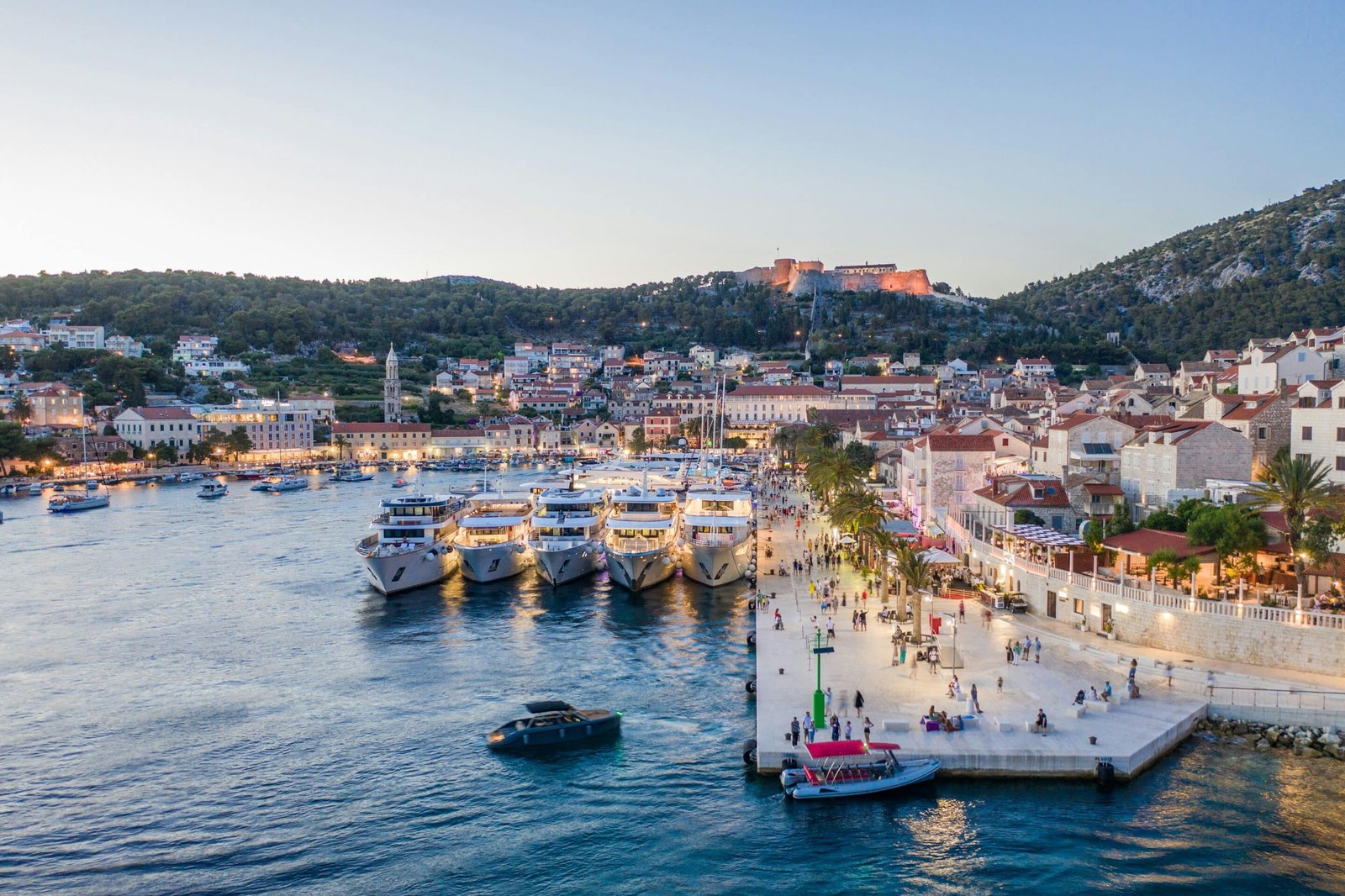
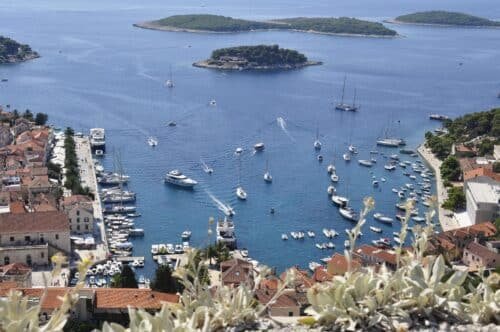
Hvar Town is the postcard. The Riva promenade with its line of expensive yachts, the central square with St Stephen’s cathedral, and the Spanjola fortress on the hill above. Most of the famous photos are taken from the fortress at sunset.
What’s actually worth your time:
- Spanjola Fortress. A 20-minute walk uphill from the main square. €10 entry. The view down over the town and the Pakleni Islands is the best on the island. Go in late afternoon for softer light.
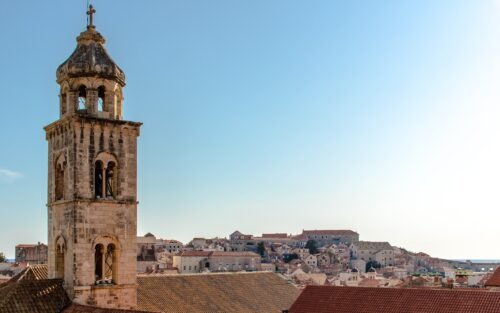
- St Stephen’s Cathedral and Square. The square is the largest in Dalmatia. The cathedral itself is small but the bell tower is a highlight if it’s open.
- The Arsenal and Hvar Theatre. One of Europe’s oldest public theatres, dating to 1612. Currently being restored — check status.
- The Pakleni Islands. A string of small islands a 5-10 minute taxi-boat ride from the harbour. Clearer water than the town beaches, several beach restaurants, and the only naturist beach (Jerolim) if that’s your thing.
What to skip if you’re tight on time: the Franciscan Monastery (small museum, fine if you’re already nearby), and the package tours that combine the Blue Cave with Hvar in one day — they cram too much in.
Stari Grad and the rest of the island
Stari Grad is older than Hvar Town in every sense. It was founded by Greek colonists in 384 BC and the Stari Grad Plain — the agricultural land laid out by those Greeks — is still in use 2,400 years later. UNESCO listed the plain in 2008.
The town itself is smaller, quieter, with stone streets and far fewer day-trippers. We send guests here for a slower-paced base, especially families.
- Tvrdalj Castle. The 16th-century fortified summer house of poet Petar Hektorović. The interior fish pond is the unusual feature.
- Stari Grad Plain. Drive or cycle through. Old stone walls dividing fields, olive groves, vineyards. The Greek grid system is visible from above.
- Jelsa. A smaller town between Stari Grad and Sućuraj. Quiet, with a decent harbour, good for a meal.
- Sućuraj. Far eastern tip. From here a separate car ferry runs to Drvenik on the mainland (Makarska Riviera), a useful escape route if you’re heading south.

The wine and lavender side of Hvar
Hvar’s interior is wine country. The southern slope around Sveta Nedjelja produces some of Croatia’s best Plavac Mali — a heavy red made from a relative of Zinfandel. Tomić, Carić, Plančić and Zlatan Otok are all worth a visit if you book ahead.
Lavender fields cover the central plateau around Velo Grablje and Brusje. Peak bloom is mid-June through mid-July. Even outside that window, the dried lavender shops in Hvar Town and Velo Grablje are a real local product, not just a tourist thing.
Beaches — the actual list
Hvar’s beaches are mostly pebble or rock-and-concrete. Sandy beaches don’t really exist on the island.
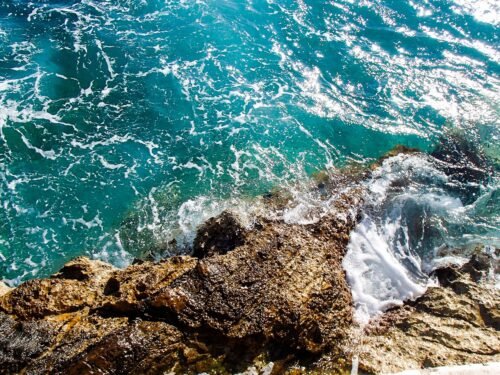
- Dubovica. The most photographed beach on the island. A small pebble cove with a single stone house in the middle, on the south coast 10 km east of Hvar Town. Park up at the road and walk down 5-10 minutes. Crowded by 11:00 in summer.
- Pokonji Dol. Closest to Hvar Town, about 25 minutes’ walk along the coastal path or a short taxi-boat. Pebbly, with a beach bar.
- Mlini. Just past Pokonji Dol on the same path. Quieter, a small beach restaurant.
- Pakleni Islands beaches. Palmižana on Sveti Klement is the most developed (full restaurant, sun loungers); Stipanska, Mlini cove and the smaller bays are more natural.
- Zaraće. A pair of small bays divided by a rock, 7 km east of Hvar Town. Less crowded than Dubovica.
- Lučišća. Far east of the island, near Sućuraj. Pebbles, clear water, almost empty.
The Blue Cave isn’t on Hvar — clearing this up
This comes up so often we have to address it. The Blue Cave (Modra špilja) is on Biševo, a small island just off Vis. It is not on Hvar. Most “Blue Cave from Hvar” tours leave from Hvar harbour, sail across to Biševo, do the cave, and come back — typically 6-8 hours total, often combined with the Green Cave (Vis), Stiniva beach (Vis) and the Pakleni Islands.
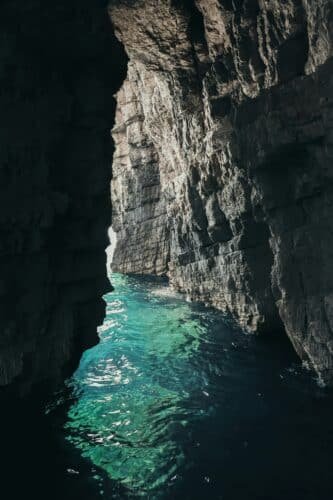
If the Blue Cave is your priority, you can also leave directly from Komiža on Vis (closer) or Split (slightly longer transfer but more options).
Mistakes we see clients make
- Booking accommodation in Stari Grad and assuming they’ll be in Hvar Town nightlife. Plan for the cab ride, or stay in Hvar Town.
- Showing up at Split ferry terminal without a booked ticket in August. Catamarans sell out, sometimes a day or two ahead.
- Renting a car for a 2-day visit. Hvar Town is walkable, the Pakleni Islands are by boat, and a single taxi to Dubovica costs less than the daily car rental + ferry.
- Going to the Pakleni Islands without checking the last taxi-boat back. They stop earlier than people expect, especially in shoulder season.
- Doing the Blue Cave from Hvar in July. Long queues at the cave entrance can make the whole tour feel rushed. Earlier morning departures help.
Best time to visit Hvar
Mid-May through late June, and September: warm sea (22-24°C), open restaurants, smaller crowds, ferries running full schedule. July and August are hot, packed, and accommodation prices double. The Hvar nightlife scene runs hardest in those months — that’s a draw or a deterrent depending on what you’re after.
April and October are quieter still — some restaurants and beach bars closed, but you’ll have Spanjola fortress almost to yourself. Winter is very quiet; many places shut entirely.
How we help clients with Hvar trips
Most of our role with Hvar is the bookend logistics — the airport-to-Split ferry leg, and then the Hvar-back-to-the-mainland leg. We pick up at Split airport, drop at the ferry terminal in time for the catamaran or car ferry, and meet clients again on return. For day trips from Split that include Hvar, we coordinate with the catamaran schedule so the day actually works.
If you’d like us to handle the drives that bookend a Hvar trip — from Split or Dubrovnik — send us your ferry times and we’ll work out the pickup. Croatia Limo drives the Split-to-ferry route year-round and we know the loading queue rhythms by now.
Frequently asked questions
How do you get to Hvar from Split?
Two options. The Jadrolinija or Krilo catamaran from Split to Hvar Town takes about 1 hour and costs roughly €20 one way. The Jadrolinija car ferry to Stari Grad takes 2 hours, costs less (~€8 per foot passenger), and arrives on the opposite side of the island.
Should I stay in Hvar Town or Stari Grad?
Hvar Town for nightlife, restaurants and the buzz. Stari Grad for a quieter, older feel with the UNESCO-listed Stari Grad Plain nearby. Both are on the same island, 20-25 minutes apart by car or bus.
Is the Blue Cave on Hvar?
No. The Blue Cave is on Biševo, a small island off Vis, not Hvar. Most Blue Cave tours leave from Split, Hvar Town or Komiža. Hvar has plenty of swimming spots and beaches but the Blue Cave is a separate trip.
What is the best beach on Hvar?
Dubovica is the most photographed — a pebble cove on the south coast about 10 km east of Hvar Town. The Pakleni Islands offshore have clearer water and quieter coves. Mlini and Pokonji Dol are easier to reach if you don’t want to drive.
When is the best time to visit Hvar?
Mid-May to late June and September are the sweet spots — warm sea, open restaurants, manageable crowds, and ferries running on full schedule. July and August are hot, packed and expensive.