Our drivers take guests to both parks every week from spring through autumn — Krka from Split, Zadar and Šibenik, Plitvice from Zagreb and Zadar. The question we hear in the car more than any other is the one in the title. Most guests assume the parks are similar enough that it doesn’t matter much. They aren’t, and it does.
This is the same breakdown we give clients on the phone when they’re trying to decide. Prices, distances, what’s actually included in the ticket, what surprises them when they get there, and where most travel blogs get the swimming rule wrong.
The 60-second answer
Pick Krka if you’re staying anywhere on the Dalmatian coast — Split, Zadar, Trogir, Šibenik, Primošten, Makarska. The drive is one to two hours, the park is smaller and easier to do in half a day, and you can still swim in three designated spots inside the park boundary during summer.
Pick Plitvice if you’re based in Zagreb, or if hiking and lake scenery rank higher for you than waterfalls and easy access. It’s bigger, older as a park, UNESCO-listed since 1979, and the most photographed place in the country. The trade-off: longer drive from the coast, no swimming anywhere, timed-entry tickets that sell out in summer.
If you have time for both — do both. They’re different enough that visiting Krka doesn’t replace Plitvice. We drive plenty of clients who do one each on a multi-day Croatia trip, with a coastal stay in between.
Where you’re staying changes everything
This is the single biggest factor and the one most guests underweight. Below are the typical drive times by car (highway where available, no stops):
- Split → Krka (Lozovac entrance): ~85 km, 1 h to 1 h 20 min via A1 highway
- Zadar → Krka: ~85 km, ~1 h via A1
- Šibenik → Krka: ~15 km, 15-20 min
- Zagreb → Plitvice: ~130 km, ~2 h via E65/E71 and D1
- Zadar → Plitvice: ~120 km, 1 h 45 min – 2 h
- Split → Plitvice: ~245 km, ~3 h
- Dubrovnik → Plitvice: ~430 km, 5-6 h (passes through Bosnia)
From Dubrovnik, neither park is a comfortable day trip. We tell those clients honestly: do Plitvice on the way north if you’re heading to Zagreb, or Krka with an overnight in Šibenik or Split. A round trip in one day means more time on the road than in the park.
Zadar to Krka National Park transfer
2026 entrance fees — what you’ll actually pay
Both parks use a tiered seasonal pricing model. Both top out at €40 in summer for adults, but their shoulder and winter prices are very different.
Krka National Park (per adult, 2026):
- January, February: €6.64
- March, November, December: €7.00
- April, May, October: €20.00
- June – September: €40.00 (after 15:00 in peak season: €30.00)
- Children 7-18: €4 to €28 depending on season
- Children under 7: free
Plitvice Lakes National Park (per adult, 2026):
- November – March: €10
- April, May, October: €23
- June – September: €40 (after 16:00 in peak season: €25)
- Children under 7: free; 7-18 pay reduced rates
Both tickets include the in-park transport — boat at Krka (Skradin to Skradinski Buk), bus shuttle at Krka (Lozovac to the falls), electric boat across Lake Kozjak at Plitvice, and the panoramic train at Plitvice. Boats and shuttles run April 1 to October 31 at both parks; outside those months you walk or drive in directly.
Prices are reviewed by the parks every season — the official Krka National Park and Plitvice Lakes National Park websites have the latest rates if you’re booking close to your trip.
Krka in winter at €7 is genuinely good value if you don’t mind the boats not running. Plitvice at €10 in winter is the most underrated time to go — frozen waterfalls, no crowds, and most of the lower trails open if there’s no heavy snow.
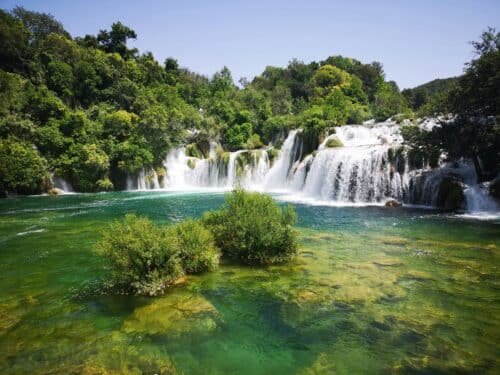
Krka — what we drive guests to, and what surprises them
Krka has three main entrances, but most visitors only see two: Lozovac and Skradin. Both lead to Skradinski Buk, the headline waterfall complex. Current opening hours, ticket prices and entrance details are published on the official Krka National Park site.
Lozovac is the practical choice if you’re driving or being driven. Free parking, a short shuttle bus down to the falls (included in your ticket from April to October), and you can be on the boardwalk loop within fifteen minutes of arriving. The Skradinski Buk circular trail is roughly 1.9 km of wooden boardwalks and takes about an hour at a normal pace, longer if you stop for photos at every cascade — and you will.
Skradin takes longer but gives you the boat ride included in the ticket. The boat from Skradin pier up to Skradinski Buk takes around 30 minutes each way and runs every 30-60 minutes in season. We drop guests at the parking lot in Skradin town and they walk down to the pier — the town itself is pleasant for a coffee while you wait for the boat.
What surprises people: the park is bigger than the Skradinski Buk loop suggests. Roški Slap — a quieter waterfall complex 25 km upstream — and the Visovac monastery on its island in the middle of the river are both worth seeing if you have a full day. Most day-trippers from Split miss them entirely. If your ticket category is “All accessible land sites,” you can visit both.
The other surprise: Krka is hot in summer. Mediterranean climate, limestone, no shade for stretches of the boardwalk. We tell guests to bring water, a hat, and to consider arriving for the 15:00 discount — softer light, cooler air, and a smaller bill.
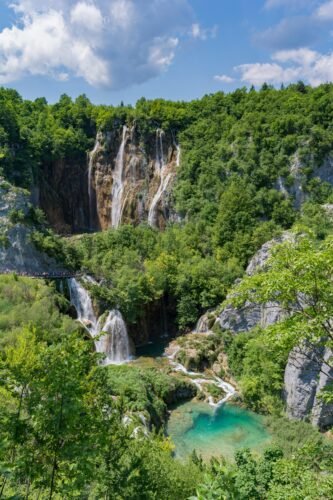
Plitvice — what to expect, and which entrance to pick
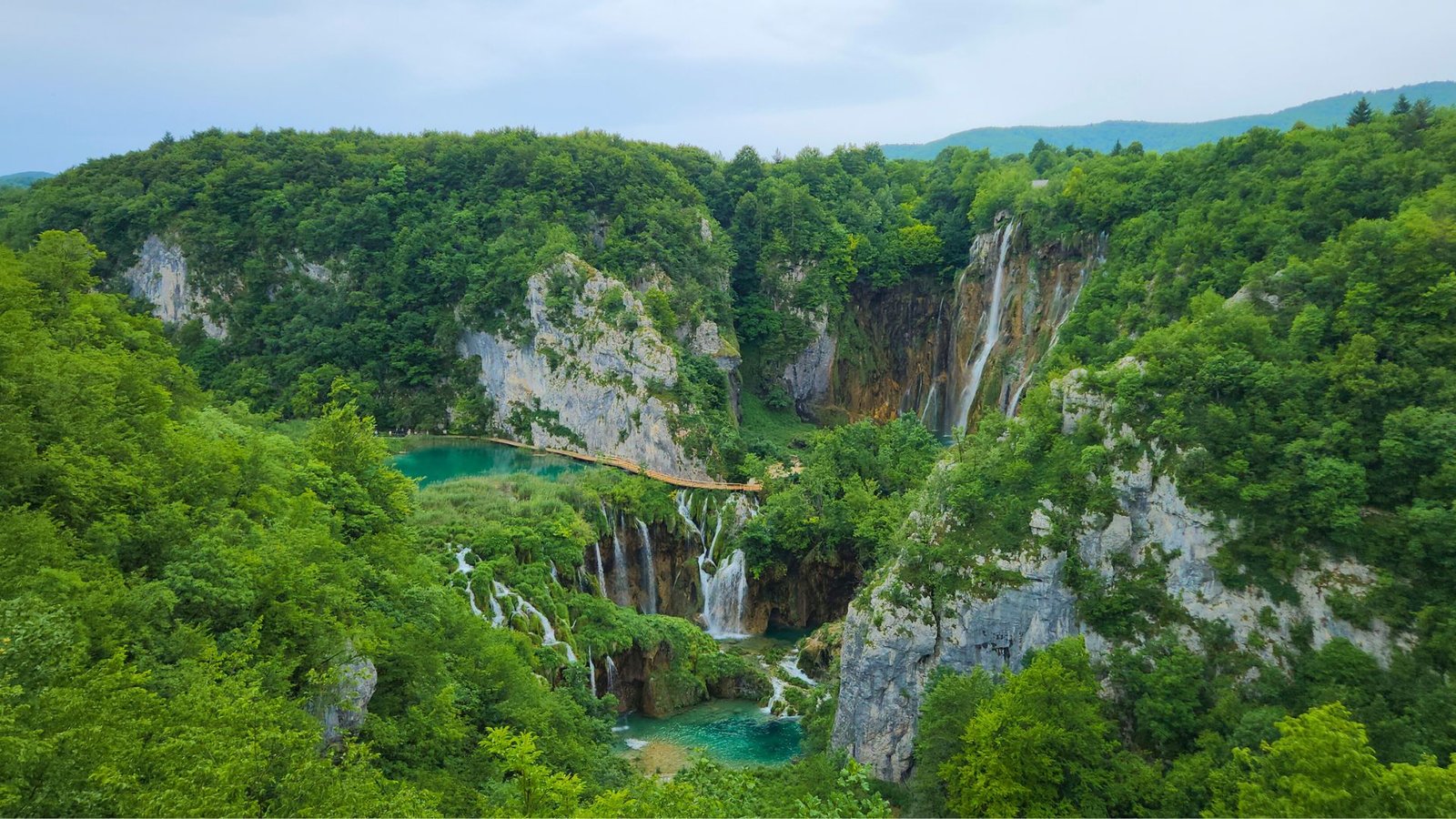
Plitvice is far bigger than Krka — roughly 295 km² of forested karst with 16 named lakes connected by waterfalls and travertine barriers. Veliki Slap, Croatia’s tallest waterfall at 78 metres, sits at the lower end of the park. Up-to-date prices, entrance status and timed-entry rules are on the official Plitvice Lakes National Park site.
There are two entrances: Entrance 1 (Rastovača) in the north, closest to the Lower Lakes and Veliki Slap; and Entrance 2 (Hladovina) in the south, closer to the Upper Lakes. They’re a few kilometres apart on the same road.
For a first visit with limited time, we tell clients to enter at Entrance 1. You walk down to Veliki Slap first, which is the photo most people came for, then loop through the Lower Lakes, take the electric boat across Kozjak, and either continue through the Upper Lakes or take the panoramic train back to the entrance. Route C — the most popular programme — covers all of that and takes 3.5 to 4 hours at a steady pace.
Entrance 2 is the better pick if you’ve been before, want a quieter start, or are doing the longer Route H or K hikes. The Upper Lakes scenery is gentler — fewer dramatic drops, more calm pools and boardwalks above them.
Parking at Plitvice is not included in the ticket. Expect roughly €2 per hour at the official P1, P2 and P3 lots. P1 next to Entrance 1 is the largest and fills up between 9:00 and 14:00 in summer.
The biggest practical thing to know: peak-season tickets are timed entry and routinely sell out. From June through September, daily visitor numbers are capped, you book a specific entrance and a specific arrival window online, and you must enter within 55 minutes of your slot. Don’t show up at the gate hoping to buy.
Zagreb to Plitvice National Park transfer
The swimming question — and where most blogs get it wrong
This rule changed in 2021 and a lot of older posts still have it backwards. Here’s the current state, confirmed by both parks:
Plitvice: No swimming. Anywhere. The ban dates back to 2006 and is strictly enforced — fines and removal from the park. The lakes look swimmable. They’re not.
Krka: No swimming at Skradinski Buk since January 1, 2021. The famous Instagram shots of people in the pool at the base of the main falls are pre-2021. That spot is closed for swimming and patrolled. However, swimming is still permitted from June 1 to September 30 at three specific locations inside the park: Roški Slap, Stinice, and Pisak. These are the spots park rangers will point you to. If you’re set on swimming somewhere with that turquoise river-water look, plan to drive (or be driven) to Roški Slap — it’s about 25 km up from Skradinski Buk on a different road.
Skradin town itself, just outside the park entrance, has a public beach where the river meets the sea — the water is a brackish mix of fresh and salt, very swimmable, and the beach has changing rooms and a snack stand. We’ve waited there with the car more than once while clients took a swim after the park.
Common mistakes when planning Krka or Plitvice
A few things come up often enough that they’re worth flagging:
- Buying Plitvice tickets at the gate in July or August. They’ll be sold out. Book online at least a few days ahead, longer for the prime morning slots.
- Planning Plitvice as a day trip from Split or Dubrovnik. Doable from Split if you start at 7:00 and accept a long day. From Dubrovnik, it’s a bad idea.
- Underestimating how long Plitvice takes. Route C is 3.5-4 hours of actual walking. Add the panoramic train queue, the boat queue, lunch, photos — half a day minimum, a full day if you want to see both Lower and Upper Lakes properly.
- Wearing flip-flops to either park. The boardwalks at both parks are wood and get slippery when wet. Closed shoes with grip. Sandals at minimum.
- Going to Krka expecting to swim under Skradinski Buk. See above. Roški Slap or Skradin town beach are your options.
- Skipping the boat at Krka. If you’ve entered at Skradin, the included boat back is the calmest 30 minutes of the day. Take it.
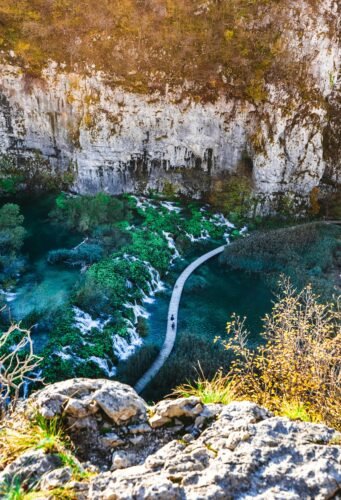
Best time to visit (and when to skip)
For both parks, the sweet spots are late April through early June and mid-September through October. Water levels are high after winter snowmelt or autumn rain, the boardwalks are open, the boats and shuttles are running, the crowds and prices are moderate, and the light is better for photos.
July and August work, but expect heat, full parking lots, sold-out Plitvice slots, and €40 tickets. If you’re going in peak summer, start at opening time or use the after-15:00/16:00 discount — softer crowds and softer light.
Winter has its own appeal at Plitvice — frozen Veliki Slap is a sight — but check the park status before you drive. Heavy snow closes individual trails, sometimes the entire park briefly. Krka in winter is quieter and the cheapest entry, but no boats and no shuttle, so you walk in.
The final call
If you’re on the Dalmatian coast and only have one day, go to Krka. It’s closer, cheaper to access, easier to combine with a coastal town, and you might even swim. If you’re in or near Zagreb, go to Plitvice — it’s why most people come to Plitvice in the first place. If you’re choosing between them on personal preference rather than logistics, ask yourself: do you want a half-day waterfall outing with a swim, or a full day of lakes-and-forest immersion? That’s the real decision.
Either way, build the drive into your plan. We’ve taken clients to both parks who lost half their park time to highway delays and parking searches in peak season. A driver who knows when to skip the A1 exit and use the back road into Šibenik, or which Plitvice lot fills first, makes more difference than any blog post.
If you’d like us to handle the drive — from Split, Zadar, Zagreb or anywhere else — send us your dates and we’ll work out the best route, entrance and timing for the day. Croatia Limo drives clients to both parks year-round, and we factor the timed-entry slots and seasonal closures into every booking.
Frequently asked questions
Are Krka and Plitvice the same?
No. Both are karst parks with waterfalls, but Plitvice is a connected lake system in a continental mountain setting while Krka is a Mediterranean river canyon with a few major waterfalls and a monastery island. Different landscapes, different climates.
Can I visit both Krka and Plitvice in one day?
Realistically, no. They are 230 km apart by road. A round trip with proper visits to both takes more time than a single day allows. Plan two days minimum.
Can you swim in Krka National Park?
Not at the main Skradinski Buk waterfall — banned since January 2021. Swimming is permitted from June 1 to September 30 at three designated spots inside the park: Roški Slap, Stinice, and Pisak.
Can you swim in Plitvice Lakes?
No. Swimming has been banned in Plitvice Lakes since 2006 and the rule is strictly enforced — fines and removal from the park.
Which is better for kids — Krka or Plitvice?
Krka. It’s smaller, the included boat ride keeps kids entertained, less walking is required to see the highlight, and there’s a chance to swim at Roški Slap or in Skradin in summer.
Do I need to book Plitvice tickets in advance?
Yes, in peak season (June-September). Daily visitor numbers are capped, you book a specific entrance and a specific arrival window online, and you must enter within 55 minutes of your slot. They sell out.