Grožnjan is rarely a destination on its own — most guests stop here as part of an Istrian loop that also covers Motovun, Buje or a winery in Momjan. But it adds something specific to a trip that the bigger Istrian towns don’t: quiet stone streets, working artists in their studios, and a music programme that’s been running for over half a century. We drive guests through here most weeks of the season.
Grožnjan sits on a ridge between the Mirna and Quieto valleys, 228 m up, with views across olive groves to the sea on a clear day. The town has fewer than 200 permanent residents but doubles in summer when the music students arrive.
Grožnjan in numbers
- First documented: 1102
- Population: ~170 permanent residents
- Elevation: 228 m
- Distance from Umag: 28 km, ~30 min
- Distance from Poreč: 33 km, ~40 min
- Distance from Rovinj: 54 km, ~1 h
- Distance from Pula: ~75 km, 1 h 15 min
- Designated: “City of Artists” in 1965
- Seat of: Jeunesses Musicales Croatia (since 1969)
- Galleries and ateliers: ~40 in town and surroundings
How to get there
By car. There is no reliable bus to Grožnjan, no train, no taxi rank in the village itself. The road climbs the hill in a series of curves; cars are not allowed inside the medieval walls. Park in the public lot just outside and walk in (a 2-minute walk to the main gate).
From the coast, the cleanest route is via Buje — the Istrian highway exits at Buje and a smaller road climbs from there to Grožnjan in about 10 minutes. From Motovun (the other famous hilltop village), Grožnjan is 25 km via Buje or via the smaller back roads through Oprtalj.
The artist colony — what makes Grožnjan different
By the 1960s Grožnjan had nearly emptied out — Italians left after WW2, Yugoslavia struggled to fill the empty stone houses. In 1965 the local council and the Croatian Association of Visual Artists declared it “City of Artists,” giving artists workshop space in the empty buildings in exchange for using the town as their working studio.
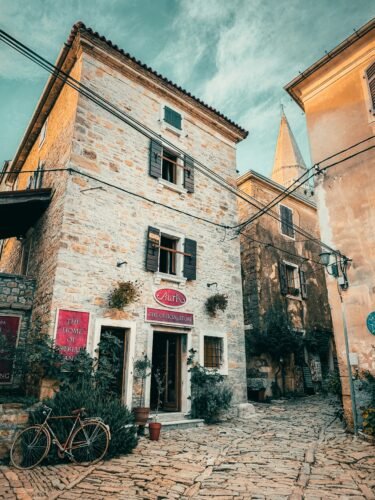
It worked. Today there are around 40 active galleries and ateliers in the village and just outside it. Most are run by individual artists who actually work in them — you can walk in, watch someone painting or carving, and buy direct.
The biggest gallery is Fonticus on the main square — the town’s exhibition hall, with rotating shows by Croatian and international artists. Beyond Fonticus, you discover the smaller ateliers by walking the streets and looking through doorways.
Jazz is Back and the music programme
Since 1969 Grožnjan has been the summer home of Jeunesses Musicales Croatia — a youth music programme that brings classical and jazz students from across Europe to the town for masterclasses and concerts. From mid-June through September there are nearly nightly concerts in the streets, in the church of St Vid and Modest, and in Spacio Cini, the open-air courtyard space. Each year’s line-up and dates are published on the Jeunesses Musicales Croatia / Grožnjan music programme site.
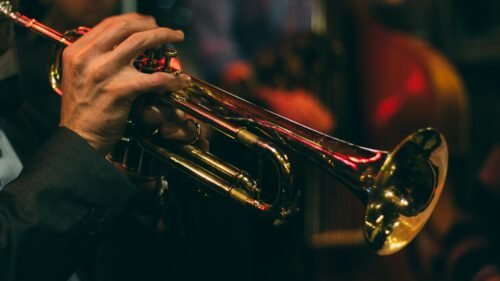
The headline event is Jazz is Back! — an international jazz festival held every July, founded in 1999 by Croatian vibraphonist Boško Petrović. The European Jazz Federation declared it the best small (boutique) jazz festival in Europe in 2008. Concerts are intimate by design — Grožnjan’s largest venue holds maybe 200 people — and the atmosphere is closer to a friend’s living room than a stadium gig.
The other major event is Ex Tempore in September — an open-air international painting festival where artists set up in the streets and produce work over a single day. The town fills with easels, paint and finished work for sale.
Walking the medieval town
The town is small enough to walk in 30 minutes and old enough to repay a slower pace. The route most people take:
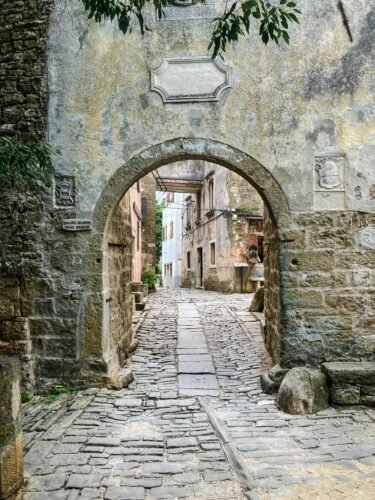
- Vela Vrata (the main gate). The 16th-century town gate, with a Venetian lion above the arch.
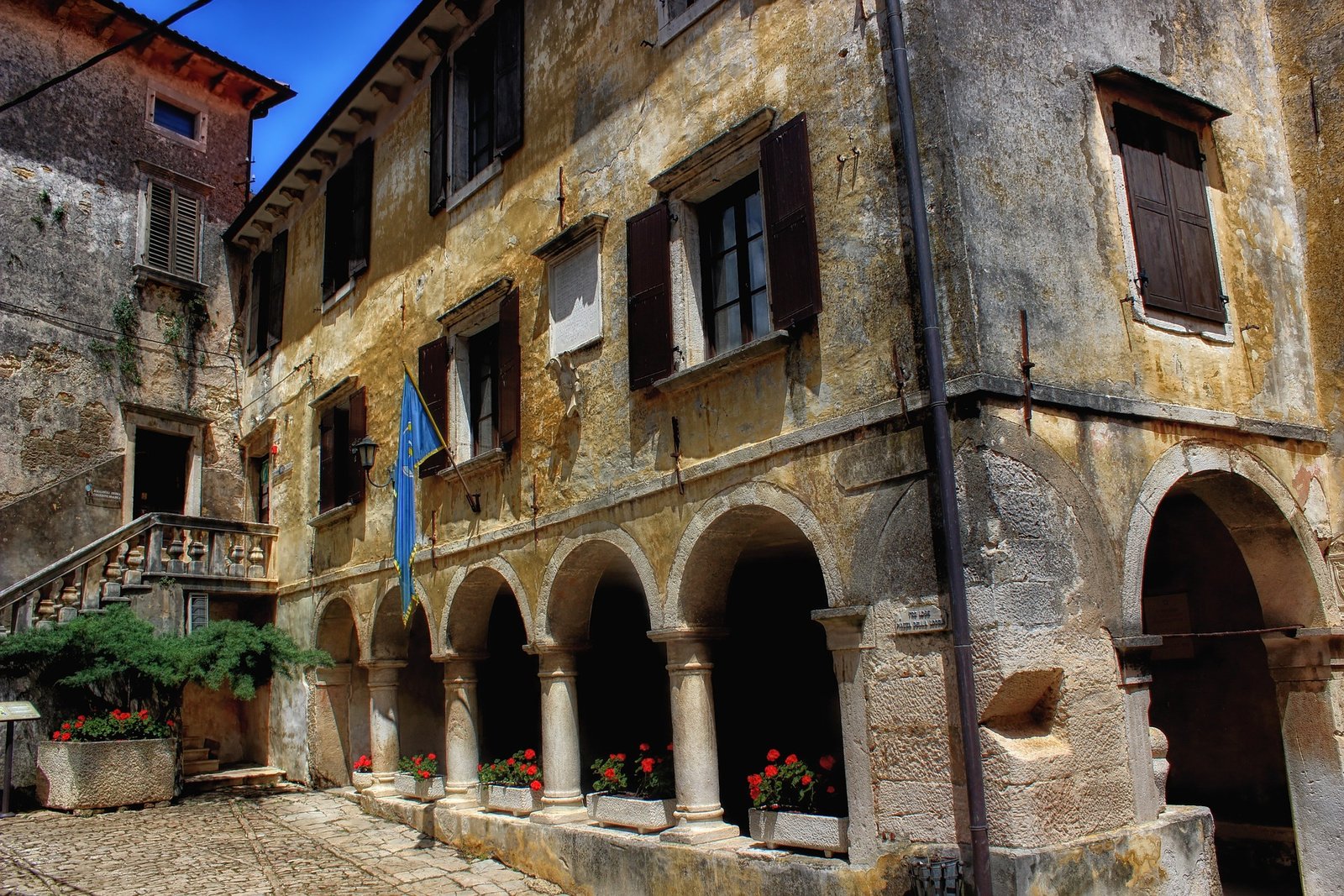
- Loggia. Just inside the gate, the old town meeting hall, now used for exhibitions and small concerts.
- Main square (Trg Corner). The Fonticus gallery is here, along with several restaurants.
- Church of St Vid and Modest. Mid-18th century, baroque, used for many of the summer concerts.
- The walls and viewpoints. Walk along the southern edge of the town for the views down to the Mirna valley.
- The studios. No fixed route — wander, look through open doors, and stop where something catches your eye.
Wineries and truffles around Grožnjan
The villages around Grožnjan — Momjan, Buje, Brtonigla, Oprtalj — make up the heart of Istrian wine and truffle country. White truffles from this region rival those from Alba in Italy.
Wineries within 15 km:
- Kabola in Momjan — organic Malvazija, family-run.
- Kozlović in Momjan — Malvazija and Muškat Momjanski.
- Cattunar in Brtonigla — large producer with a restaurant attached.
- Coronica near Umag — Teran specialist.
For truffles, the Motovun forest just south is the prime hunting ground. Truffle hunts with dogs are bookable through several operators — Karlić Tartufi being the best-known. White truffle season is roughly September to December.
Parenzana cycling trail
The Parenzana is a 123 km cycling and walking trail along the route of the narrow-gauge railway that ran from Trieste to Poreč between 1902 and 1935. The Grožnjan section is one of the most scenic — pine and olive groves, stone bridges, and several short tunnels. Bike rental in Buje, Motovun or via several agencies in Poreč.
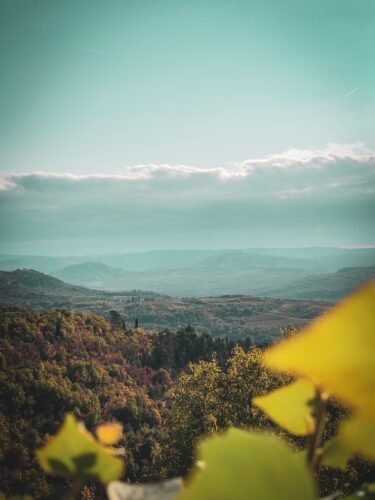
You don’t need to do the whole 123 km. A 10-15 km loop including Grožnjan and back to Buje is a satisfying half-day on a bike for most riders.
Where to eat
- Restaurant Bastia on the edge of Grožnjan with views from the terrace. Istrian classics, fair prices.
- Konoba Pintur inside the village. Small dining room, family-run, truffles in season.
- Konoba Atelier in Marušići just below Grožnjan. Reliable Istrian cooking.
- San Servolo brewery in Buje. Their own beer, food alongside.
- Buffet U Famiglia in Brtonigla. Pasta with truffles, generous portions, fair prices.
- San Rocco in Brtonigla. Pricier, more refined, hotel restaurant.
For coffee and small bites in the village itself, the cafés on the main square are pleasant in summer. Service is unhurried — that’s part of the deal.
Day trips from Grožnjan
- Motovun. 25 km. The other famous Istrian hilltop town, larger and busier than Grožnjan, with the summer film festival in late July.
- Hum. 35 km. Officially the smallest town in the world (around 30 inhabitants). A 10-minute walk-through, but worth it for the title alone.
- Rovinj. 54 km. The Adriatic coastal showpiece — Venetian, photogenic, busy in season.
- Trieste (Italy). 50 km. Easy day trip across the border for those with passports.
- Piran (Slovenia). 35 km. The Slovenian coastal old town.
Common questions we get on the way to Grožnjan
- Driving up to the village walls. No through-traffic. Park outside.
- Visiting on Mondays. Many galleries close. Plan for Tuesday-Sunday.
- Trying to cover Grožnjan, Motovun, Hum, Rovinj and a winery in one day. Possible but you’ll see nothing properly. Pick three at most.
- Skipping the concerts in summer. The free or low-cost evening concerts are a different experience from anything else in Istria.
- Coming in winter expecting things open. The village largely shuts down November-March. A few restaurants stay open by reservation.
Best time to visit
July for Jazz is Back, September for Ex Tempore and the start of truffle season, late May through October for general visiting and concerts. Mid-summer days can be hot but the village’s elevation keeps it cooler than the coast — a useful escape on a 35°C August afternoon.
April and early May are quietest — galleries opening for the season, restaurants warming up, no crowds. December through March most things close.
How we drive clients to Grožnjan
Most of our Grožnjan runs are part of wider Istria itineraries — pickup in Pula or Rijeka, a winery stop in Momjan or Brtonigla, a couple of hours in Grožnjan, lunch somewhere in Buje, and back along the coast. The drive itself is part of the value — the Mirna valley between Buje and Motovun is one of the prettier inland routes in this part of the Adriatic.
If you’d like us to organise a half-day or full-day Istria itinerary that includes Grožnjan, send us your dates and what you’d like to combine — wine, truffles, music or just the villages. Croatia Limo drives this region year-round and we know which winery is in harvest, which gallery just changed exhibitions, and where to park in a village that doesn’t allow cars.
Frequently asked questions
How do you get to Grožnjan?
By car only — there’s no public bus that’s reliable. From Umag it’s 28 km (~30 min), from Poreč 33 km (~40 min), from Pula ~75 km (~1 h 15 min). The road to the village winds up the hill; cars must park outside the walls.
Is Grožnjan worth visiting?
Yes if you like quiet medieval villages, art galleries and Istrian food. The town has been the seat of Jeunesses Musicales Croatia since 1969 and was declared ‘City of Artists’ in 1965. It’s small enough to see in 2-3 hours.
What is the Jazz is Back festival?
An international jazz festival held in Grožnjan every July, founded in 1999 by Croatian vibraphonist Boško Petrović. Declared the best small jazz festival in Europe by the European Jazz Federation in 2008. Concerts in the open-air Spacio Cini space and around the village.
Can you cycle the Parenzana through Grožnjan?
Yes — the Parenzana is a 123 km cycling and walking trail along the route of the old Parenzana railway (closed 1935). The Grožnjan section runs through pine and olive groves and crosses several stone bridges and tunnels. Bike rental in Buje or Motovun.
Is Grožnjan good for kids?
Mixed. The village is car-free and safe to wander, the views are dramatic, and during the music festivals there’s atmosphere. But there are no playgrounds, no beaches and no major activities aimed at young children. Better as a stop on a wider Istria trip than as a base.