We drive guests to Pag from Zadar, Rijeka, and the airports throughout the year. The questions in the car split clearly by age — under 30 it’s “how do I get to Zrće?”, over 40 it’s “where do I find good Paški sir?”. Both are valid trips and both deserve real answers.
Pag is the strangest-looking island in Croatia. Long, thin, and largely treeless on the side that faces the Velebit mountains. The bare karst landscape and the Bura wind that strips it are the two facts that explain almost everything else about the island — its cheese, its lamb, its salt, and which beaches work in which weather.
Quick facts
- Length: ~63 km, the fifth-largest Croatian island
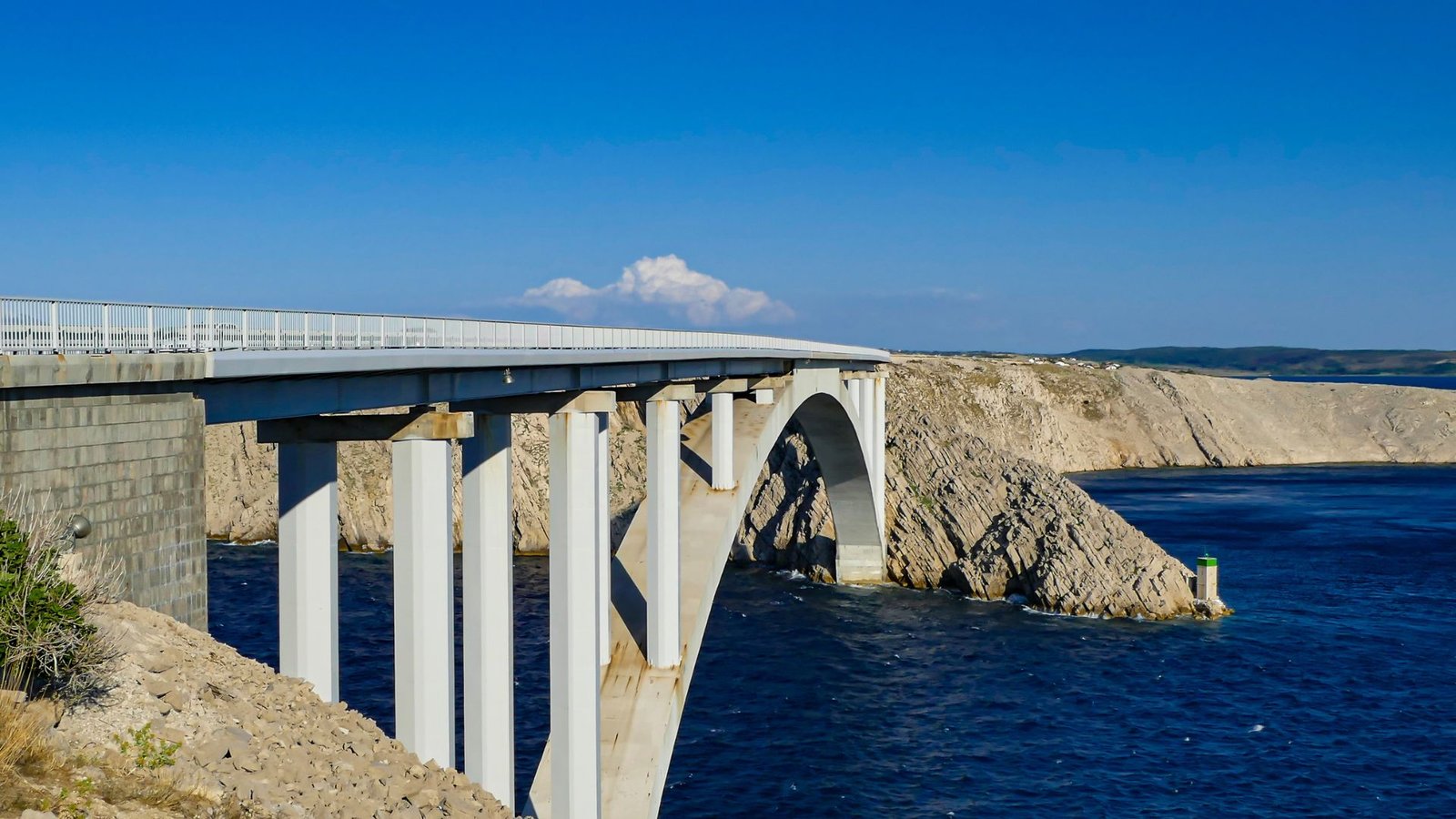
- Two access points: Pag Bridge from Posedarje (south, no toll) and Prizna-Žigljen ferry (north)
- Prizna-Žigljen ferry: 15 min crossing, ~21 daily departures in peak season, ~€2.40 foot passenger and ~€15 for a small car
- Main towns: Pag Town (south, historic), Novalja (north, party hub), Lun (far north, olive groves)
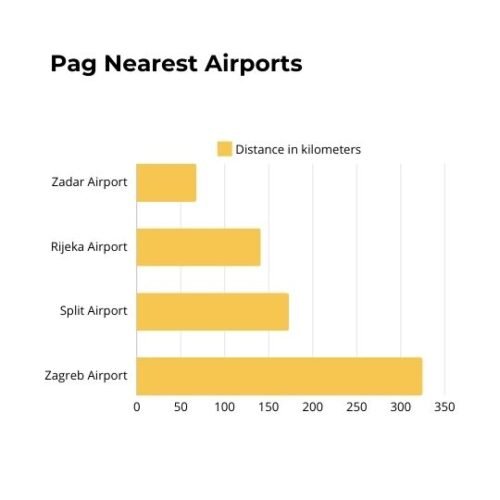
- Closest airports: Zadar (50 km from Pag Bridge), Rijeka (~110 km via Prizna ferry)
- Famous for: Paški sir cheese, Pag lamb, Zrće Beach clubs, Pag salt, the Bura wind
How to get to Pag — and which entry point to choose
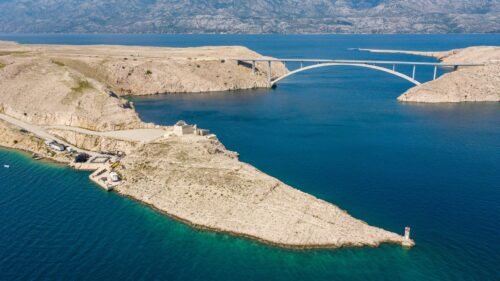
Pag Bridge from the south. The most common access. From the A1 motorway, exit at Posedarje and follow the signs. The bridge crosses Velebit Channel and lands you on the southern part of the island, 23 km from Pag Town. No toll. The bridge can close in strong Bura wind — check before you go in winter. Detailed visitor info, accommodation and event listings are on the Pag Tourist Board site.
Prizna-Žigljen ferry from the north. The Velebit coastal road from Senj south goes through Prizna, where a frequent car ferry crosses in 15 minutes. About 21 departures daily in peak summer (June-September), fewer in shoulder season. ~€2.40 per foot passenger, ~€15 for a small car. Foot passengers have priority over cars in the queue. This is the better route if you’re coming from Rijeka, Plitvice or northern Croatia.
Zrće Beach — the truth about the party scene
Zrće is a 1.6 km pebble beach in a long bay near Novalja. From mid-June through early September it operates as Croatia’s biggest open-air club zone. From October through May it’s an empty pebble beach.
The 2026 club lineup at Zrće:
- Kalypso — the original, longest-running, mixed crowd
- Papaya — the biggest production, festival-style line-ups
- Aquarius — the Zagreb club’s seaside outpost
- Nomad — newer, has gained ground in recent years
- Symbol and Lift — the latest additions to the strip
What to know:
- Day parties typically run 14:00 to 21:00, then night parties 23:00 to 06:00 in season.
- Drinks are tourist-priced — beer €5-€8, cocktails €10-€14.
- The beach itself is free; you pay for sun loungers (€15-€30 per day).
- Major festivals (Sonus, Hideout, Fresh Island) sell out months ahead.
- Outside the festivals, you can usually walk in.
- Novalja town is a 5-minute taxi from the beach. Most visitors stay there.
If a beach holiday with no music is what you want, Zrće is not your beach. There are dozens of quieter coves on the island, all 20 minutes’ drive away.
Pag cheese and lamb — what to actually eat
Paški sir is a serious product, not a souvenir. The sheep eat aromatic herbs (sage, thyme, immortelle) that grow in the salt-blown soil; the milk picks up that flavour; the cheese is hard, sharp, salty, and ages well.
The two main producers:
- Sirana Gligora in Kolan, in the centre of the island. The biggest producer, full visitor centre with tastings and sales. International awards. Easy to visit, well-organised.
- MIH (Mliječna industrija Hrvatska) also in Kolan. Different style, smaller-scale tastings. Worth comparing if you have time for both.
For Pag lamb, eat in a local konoba — Boškinac near Novalja for the upscale version (also a hotel and winery), or any village restaurant for the honest one. The lamb gets the same herb diet as the sheep that make the cheese, so the meat has a distinctive flavour you don’t get on the mainland.
Pag Town — the historic side
Pag Town in the south is the old capital, founded in its current location in the 15th century. The street grid was designed by Juraj Dalmatinac, the same architect who built Šibenik cathedral. Worth a half-day:
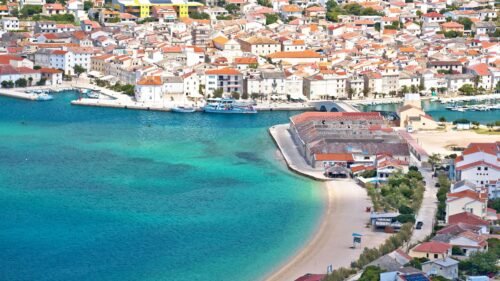
- Pag Town Square with the unfinished Church of the Assumption
- Pag Salt Pans just south of town — Pag has produced salt since Roman times and the pans are still in use
- The Pag Lace Museum — the local lacework is on UNESCO’s intangible heritage list
- Local market — best place to buy cheese, lamb, salt and herbs straight from producers
The bare landscape and the Bura
The eastern half of Pag, facing the Velebit mountains, looks like another planet. White karst, almost no trees, low stone walls dividing nothing in particular. The Bura — the cold dry wind that descends from the mountains — strips salt off the sea and deposits it on the island, killing trees and shaping everything else.
Practical implications:
- The Pag Bridge can close to traffic in strong Bura. Trailers, motorbikes and tall vehicles are restricted first.
- The Prizna ferry pauses in extreme wind. Less common but happens.
- The eastern beaches get wind-blown in autumn and winter. The western and southern coast are more sheltered.
- The “Life on Mars” walking trail near Vidalići and Stara Vas covers the most lunar terrain. Marked, easy, and gives you a sense of the wind-shaped landscape without driving across it.
Beaches beyond Zrće
Pag has more beaches than its reputation suggests. The headline is the party scene; the reality is that most of the coast is quiet pebble or sand-pebble coves.
- Caska Beach. Long, mostly sand-pebble, near Novalja. Family-friendly, much quieter than Zrće.
- Straško Beach. Near Novalja, naturist beach as well as standard, pine shade.
- Sveti Duh. Small bay near Pag Town with a chapel above. Pebble.
- Ručica. A natural sand-pebble cove on the eastern coast near Metajna, surrounded by Mars-like cliffs.
- Beritnica. Just past Ručica. Even quieter, more dramatic.
- Lun olive grove and beaches. Far northern tip — ancient olive trees (some over 1,000 years old) and quiet swimming spots.
Mistakes we see clients make
- Going to Zrće in October expecting parties. Empty beach.
- Crossing the Pag Bridge in strong Bura without checking road status. Sometimes you have to wait or detour to the Prizna ferry.
- Skipping Pag Town in favour of Novalja. Pag Town is the older, more interesting place to walk.
- Buying “Pag cheese” at a Zadar supermarket and assuming it’s the real thing. Some of it is; much isn’t. Buy at the producer or at a Pag market for the genuine article.
- Driving across the island at 23:00 in summer expecting empty roads. Zrće traffic out of Novalja can be unexpectedly heavy.
Best time to visit Pag
For Zrće and the party scene: late June through August. For everything else — cheese tastings, beaches, walking, exploring Pag Town: May, early June, and September.
October has good weather some years and Bura the next; the island starts shutting down for winter. Winter is dramatic — empty, windy, with fewer than half the restaurants open — but memorable if you like that kind of trip.
How we drive clients to Pag
From Zadar we use the Pag Bridge — direct, no toll, about 50 minutes to Pag Town and 1 h 15 min to Novalja. From Rijeka we run down the Velebit coastal road and use the Prizna ferry — slower (~2 h 30 min total) but the road itself is one of the most scenic in Croatia.
If you’d like us to handle the drive — pickup, ferry timing, accommodation drop-off — send us your dates and where you’re heading on the island. Croatia Limo drives Pag year-round and we know when the bridge closes and how the ferry queue moves at 7:00 in August.
Frequently asked questions
How do you get to Pag Island?
Two ways. The Pag Bridge from the south at Posedarje (no toll) connects the island to the Zadar mainland. The Prizna-Žigljen car ferry from the north (15 min, ~€2.40 foot passenger, €15 with a small car) connects to the Velebit coastal road heading toward Rijeka.
Is Zrće Beach worth visiting?
Yes if you’re under 30 and looking for daytime club parties (Kalypso, Papaya, Aquarius, Nomad). No if you want a quiet beach. Zrće is loud, packed and expensive in July and August. Outside peak hours, it’s a normal pebble beach.
What is Pag cheese?
Paški sir — a hard sheep’s cheese with a distinctive saltiness from the herbs the sheep eat on the island’s wind-blown landscape. Sirana Gligora and MIH are the two big producers; both have tasting rooms and shop sales.
Why is Pag landscape so bare?
The Bura wind blows salt off the sea onto the eastern half of the island, killing most vegetation and creating the lunar-looking landscape. Combined with centuries of grazing, it left almost no trees on the Velebit-facing side.
When should I avoid driving on Pag Bridge?
When the Bura wind is strong — winter and early spring storms can close the bridge entirely for cars. Vehicles with trailers, motorbikes and high-sided vans are restricted first. Always check road status before the drive.